PLA, PETG, ABS or TPU: how to choose the right material
Choosing a material is the single decision that most often decides whether a printed part works. The good news is that for most functional parts the choice comes down to four materials, and a handful of questions is enough to pick between them.
The short answer
Use PLA when the part is a model or a fit check and stays indoors. Use PETG when it needs to be tough and has to live with moisture. Use ABS when it will get warm. Use TPU when it has to bend and return to shape. The table below shows the main differences. Every number in it is a typical value: the datasheet of the filament you actually use has the final word.
| Material | Stiffness and strength | Heat | Flexibility | Best for | Watch out |
|---|---|---|---|---|---|
| PLA | Rigid and easy to print | Softens around 55-60 °C | Brittle under impact | Prototypes, models and indoor parts | Hot cars and long outdoor use |
| PETG | Tougher, with some give | Around 70-80 °C | Slightly flexible | Fixtures, trays and housings | Can string and scratch |
| ABS | Tough, sandable and paintable | Around 95-105 °C | Little | Heat-resistant parts, enclosures | Warps and shrinks on large flat parts; prints with fumes, so it needs ventilation |
| TPU | Soft and rubber-like (commonly Shore 85A-95A) | Softens with heat | High | Gaskets, grips, bumpers, dampers | Slower to print; not for stiff, precise fits |
Treat the figures as rules of thumb. Different filament brands and colours shift them by several degrees, and a part under load will deform well before the quoted temperature. For any part with a real temperature or load requirement, read the datasheet of the filament that will be used.
How to decide: five questions
Answer these in order. By the end the shortlist usually shrinks to one or two materials.
- Load: does the part carry force, or only hold its shape? Parts that carry force usually point to PETG or ABS.
- Temperature: what is the warmest place the part will ever be, including a parked car or a spot next to a motor?
- Environment: will it meet water, oils, cleaning agents or direct sun?
- Appearance: do you need a matte surface you can sand and paint, or is a visible layer pattern fine?
- Flexibility: should the part stay rigid, or should it bend and come back?
If two answers pull in different directions, for example a part that is both flexible and warm, say so early. A compromise is often possible, but it is much easier to design around than to discover after printing.
Common mistakes
Most failures come from a material that was fine for the shape but wrong for the conditions.
- PLA behind a windscreen or on a dashboard. A closed car in summer is warm enough to soften it, and the part sags or bends.
- PETG for a tight press fit. It has some give and can creep, so a press fit loosens over time.
- ABS for large, thin, flat parts. They tend to warp and shrink while printing, and the corners lift from the plate.
- TPU where stiffness is needed. It is soft by nature; if the part must hold a precise shape, choose another material or redesign it.
How we usually start
We use PLA for models and fit checks, because it prints cleanly and is the quickest way to confirm a shape. PETG is our everyday engineering default for fixtures, guides, trays and housings. ABS comes in when heat or a sanded and painted finish matters, as with enclosures. TPU is the choice for gaskets, grips and anything that has to flex.
These are starting points, not rules. The real requirements of your part decide, and we would rather change the material than force a part into the wrong one.
Three worked examples
Putting the questions to work on real parts shows how quickly the choice narrows.
- A bracket for a bench-top device, indoors, with a light load: PLA is enough for the first fit check, and PETG is a better choice for the final part if it will be handled or dropped.
- A sensor housing next to a warm machine: find the highest temperature first. If it stays below about 60 °C, PETG works; if it gets close to 80 °C or more, ABS is the safer choice.
- A gasket or a bumper: TPU, because it is the only one of the four that bends and returns. A softer grade seals better, and a harder grade keeps its shape better.
In each case the deciding fact was a number or a condition, not the shape of the part. That is why we ask about the environment before we talk about the model.
Appearance and finishing
PLA and ABS have a matte surface that can be sanded and painted, which makes them the usual choice when appearance matters. PETG is smooth and slightly glossy, with the layer pattern still visible. TPU has a rubber-like, matte surface and is difficult to sand, so plan its look in advance. The colour range also differs between materials and brands, so mention the colour you need.
What to tell us when you ask
The more we know about the conditions, the better the advice: the load, the maximum temperature, where the part will be used and how many you need. You can compare all four materials side by side on the materials page, and our guide to which material lasts in heat, moisture and sun goes deeper on durability.
Not sure which one fits? Send us your file with a few lines about where the part will live, and we will suggest a material before you commit to anything.
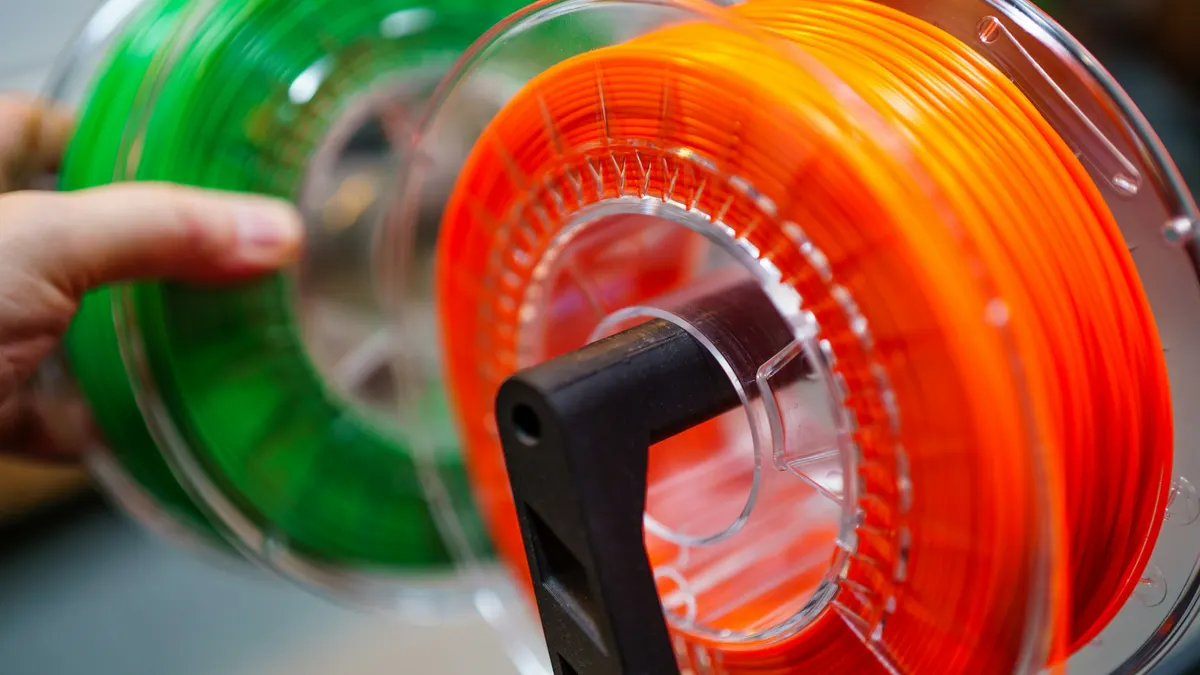
Cover photo: Jakub Żerdzicki(opens in a new tab) on Unsplash(opens in a new tab).