How to accept a batch of printed parts: an inspection checklist
A batch of printed parts is easiest to accept when everyone agreed what good looks like before printing started. This checklist covers what to agree, what to check on delivery and what to record, so that a problem can be settled with facts instead of opinions.
Agree before printing
Write down these points with the supplier. They become the standard you inspect against.
- The drawing or file revision the parts are made from.
- The critical dimensions and the tolerance that applies to each.
- The material and the colour.
- The finish: raw, sanded or painted.
- The quantity, and how many parts will be measured as a sample.
If the supplier cannot confirm one of these in writing, treat it as an open question and settle it first. It takes minutes before printing and days afterwards.
Visual check
Even layer lines are normal on an FDM part and are not a defect. Look for the things that are: warping, gaps between layers, delamination, stringing, rough patches on a surface that should be smooth, and a colour that does not match the agreed one. Compare several parts side by side, because differences between parts show up faster than flaws in a single one.
Dimension check
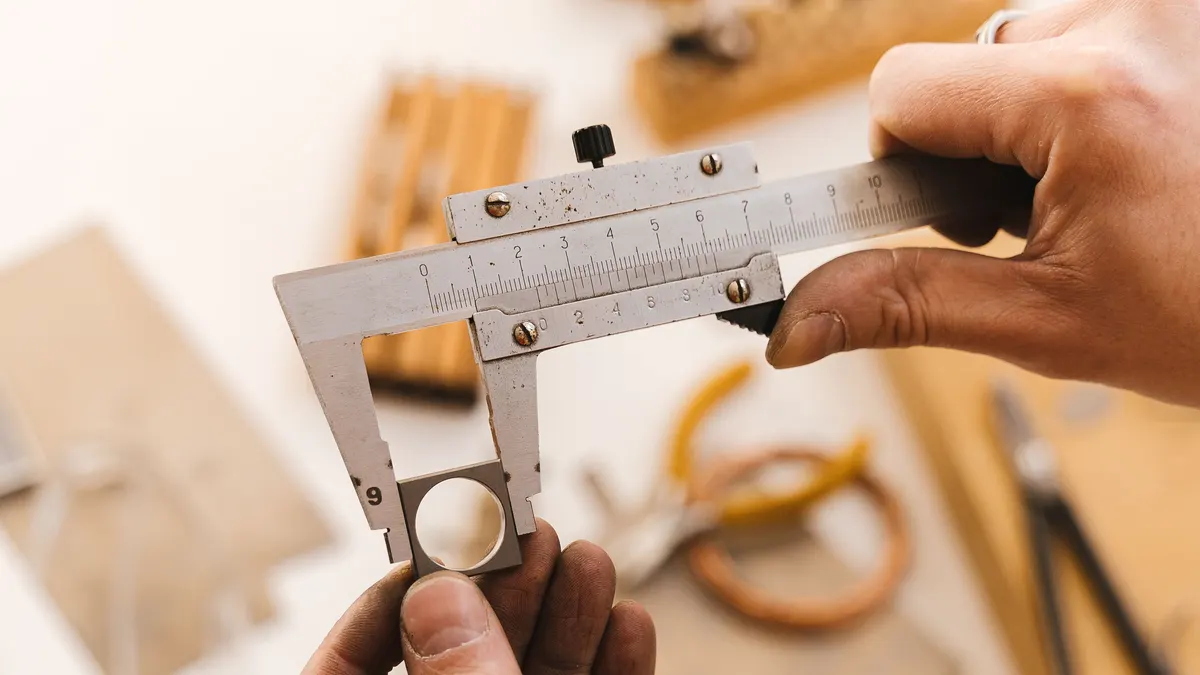
Use calipers on the critical dimensions. Where a part mates with another, try a go/no-go fit with the real mating part. Record the measured values instead of only noting that they passed. As a typical figure, FDM parts are held to about ±0.2-0.5 mm unless a tighter value was agreed.
Measure at room temperature and on a part that has cooled fully. Plastic parts can change size slightly with temperature, and a part measured warm may read differently.
Functional check
Test the function on a sample: does it fit, does it snap, does it carry the expected load, does it survive the working temperature? A part that measures correctly can still fail in use, and a quick test is cheap compared with a faulty batch.
Sampling
Inspect the first article in full, and after that inspect a sample of each batch. The size of the sample should be agreed in advance, and it can grow if problems appear. For a repeat order, compare the new sample with the measurements of the previous one.
Record keeping
- The date of delivery and of the inspection.
- The batch identifier and the number of parts received.
- The sample size and the measured values.
- Photos of the parts and of any defect.
Setting a sensible tolerance
Acceptance is only fair if the tolerance is realistic. Tight tolerances on every dimension raise the price and the number of rejected parts without making the part work better. Decide which dimensions affect the function, such as a hole that takes a shaft or a face that sits against another part, and give those a tolerance. Leave the rest at the general tolerance.
Tell the supplier which dimensions matter and why. The reason lets them choose the orientation and the settings that protect exactly those features.
Mistakes to avoid
- Checking only the look of the parts and never measuring.
- Measuring a part that is still warm or under load.
- Having no written criteria, so that every complaint becomes an argument.
- Inspecting too late, after the parts have already been fitted into an assembly.
- Throwing away a failed part before documenting it.
Inspect promptly after delivery. A defect that is reported with photos and measurements within a few days is far easier to settle than one found weeks later.
Large orders and partial deliveries
For a large order, ask for the first article before the whole batch is printed, and keep that approved part as the reference sample. If the order is delivered in several parts, inspect each delivery in the same way and compare it with the reference. Parts from different deliveries should be indistinguishable in size, colour and surface.
If a part fails
Document it: photograph the defect and measure the dimension. Contact the supplier with the drawing, the measurement and the batch identifier. Agree whether the part will be reprinted or reworked, and by when. A clear record turns a dispute into a short conversation.
Good inspection starts with a good request, so see how to request a quote for what to specify in advance, and our design rules for the design choices that prevent the most common defects.
Ready to order a batch? Send us your file together with your acceptance criteria.
Cover photo: Antoni Shkraba on Pexels(opens in a new tab).